What are affirmations and what are they used for
Affirmations are short phrases you repeat to influence how you think and feel, like “I can handle this” or “I’m doing my best.”
They’re often used to ease stress, support resilience, and help you stay steady in demanding situations. When they reflect what matters to you, they can support a more grounded and constructive inner dialogue.
Research in psychology has explored these effects for years. One of the most well-known experiments, conducted at Stanford, looked at how students respond under academic pressure. Those who practiced affirmations showed lower stress responses, stayed more engaged, and performed better in exams.
Why affirmations don’t always work
You may have tried affirmations before and felt like they didn’t quite click.
Often, they feel too generic or disconnected from what you’re actually going through. When there’s that gap, they can be hard to relate to, and may come across as forced or unrealistic.
Yet, science suggests that affirmations tend to be most effective when they feel credible and emotionally relevant. Which means, their effect comes less from how positive they sound, and more from how closely they resonate with your current self.
How do we address that ?
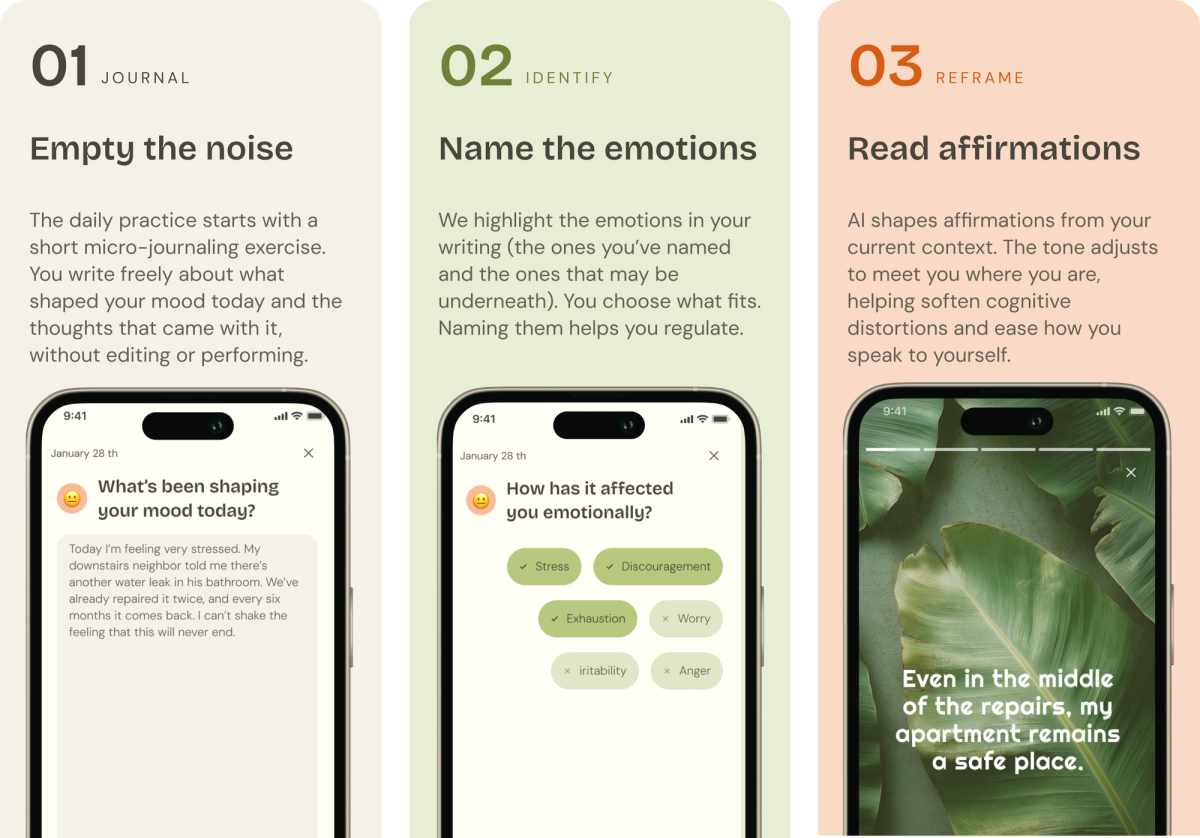
Matchamind affirmation practice is different from what you may have experienced so far. By combining micro-journaling and AI, it starts with what’s present for you, shaping affirmations that feel personal and in tune with your emotional state.
That way, your brain can take them in more easily, helping you step back and regain clarity within a few minutes. It doesn’t solve everything, but it gives you space to respond differently to what you’re going through.
Over time, this softens negative thought patterns and supports a steadier and more supportive self-talk.